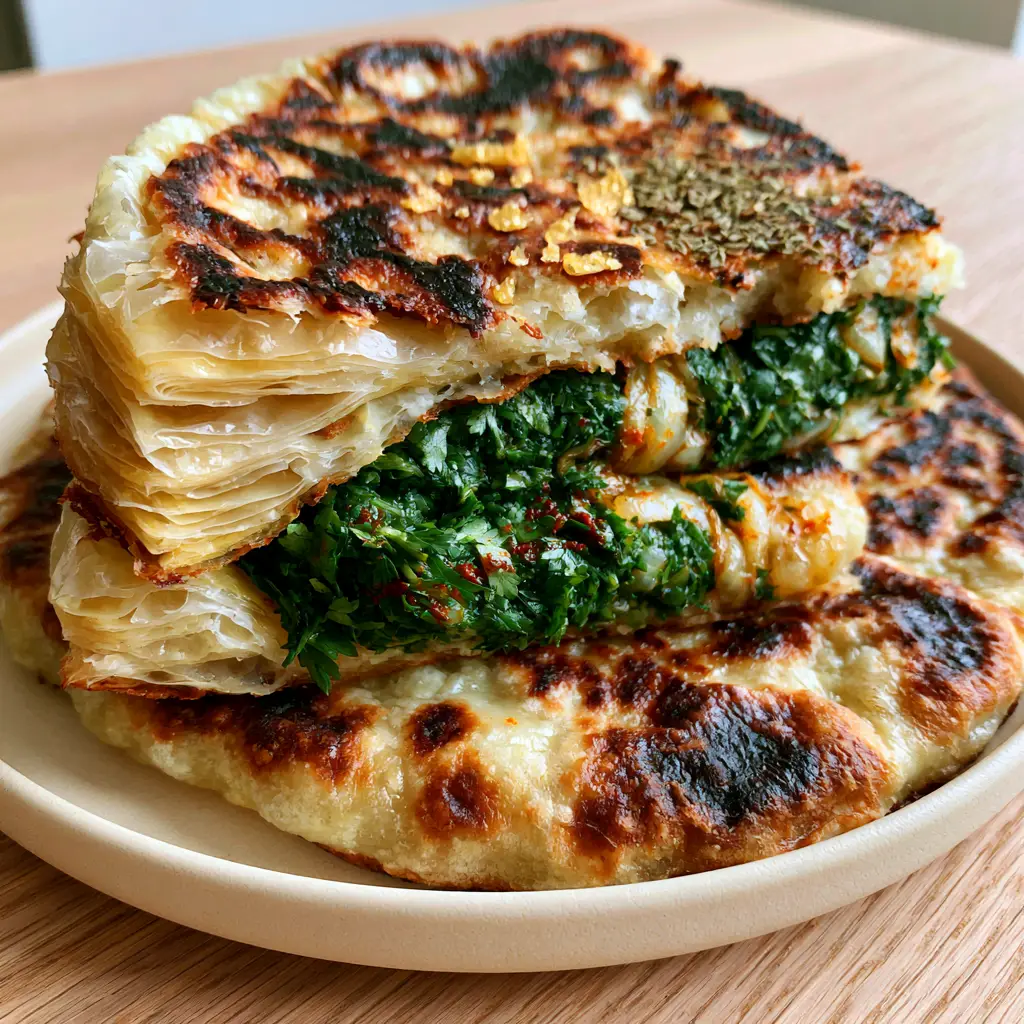
The Moroccan herb-stuffed flatbread, traditionally known as Msemmen, is a culinary masterpiece of texture and aroma. Imagine tearing into a stack of warm, buttery dough to reveal dozens of paper-thin, translucent layers.
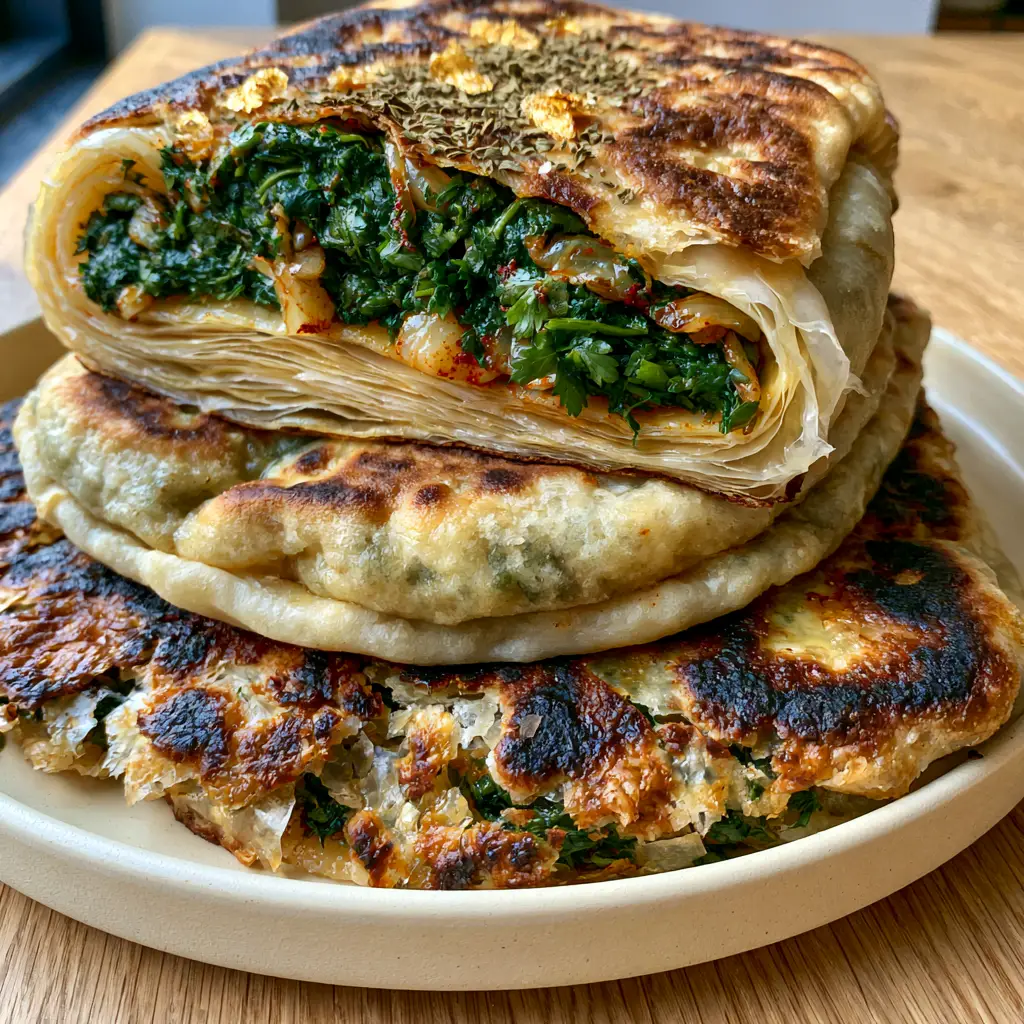
This handheld smartphone photo captures the exact moment of indulgence, with steam rising from a vibrant emerald green herb filling. Every bite offers a contrast between the shattered, flaky crust and the tender, aromatic center.
Whether you are looking for a show-stopping brunch item or a savory snack, this recipe delivers on every sensory promise. The deep golden-brown charred spots from the cast iron skillet provide a smoky depth that balances the rich, melted salted butter.
Why You Will Love This Flaky Moroccan Masterpiece
- Unrivaled Texture: The combination of high-quality flour and toasted semolina dust creates a shattered, flaky crust that crackles upon impact.
- Vibrant Herb Filling: A dense, emerald green core of finely minced parsley and cilantro provides a fresh, earthy punch.
- Aromatic Paprika Oil: Infused red paprika oil adds both a subtle heat and a stunning oily sheen to the internal layers.
- Handcrafted Elegance: This recipe uses traditional folding techniques to achieve dozens of translucent dough layers that melt in your mouth.
- Sultry Sensory Cues: From the sizzle of the skillet to the smell of sautéed white onions, this is a full-sensory cooking experience.
Essential Ingredients for the Perfect Stuffed Msemmen
To achieve the visual and structural perfection seen in our Moroccan herb-stuffed flatbread, each ingredient plays a critical role. We do not just use these for flavor; they are the building blocks of the dough’s elasticity and the filling’s vibrance.
All-Purpose Flour (3.5 cups / 440g): This provides the necessary gluten structure to allow the dough to be stretched until it is paper-thin and translucent. Use a high-protein brand if possible for the best results.
Fine Semolina (1 cup / 160g): We use this both in the dough for “bite” and as a “toasted semolina dust” between layers. This prevents the layers from sticking together, ensuring they separate beautifully when torn.
Melted Salted Butter (0.5 cup / 115g): Butter is the primary laminating agent here. It creates that characteristic oily sheen and helps produce the steam that puffs up the layers during cooking.
Fresh Parsley and Cilantro (2 cups total, finely minced): These herbs form the “emerald green” heart of the flatbread. Ensure they are minced very finely so they distribute evenly without tearing the delicate dough.
White Onions (2 medium, finely diced): Sautéing the onions first removes excess moisture. This prevents the flatbread from becoming soggy and ensures a concentrated, sweet-savory flavor profile.
Red Paprika Oil (2 tbsp / 30ml): A mix of neutral oil and smoked paprika. This is brushed onto the dough to provide color and a hint of warm spice that echoes traditional Moroccan street food.
Flaky Sea Salt and Dried Oregano: These are your finishing touches. They provide a final pop of texture and a herbaceous aroma as the flatbread hits the plate.
Must-Have Kitchen Tools for Laminating Dough
Achieving those paper-thin layers requires more than just technique; you need the right surface and heat source. A heavy cast iron skillet is non-negotiable for those deep golden-brown charred spots.
You will also need a wide, clean work surface—ideally marble or stainless steel—generously greased with oil. A sharp chef’s knife or food processor is essential for getting the herbs into that dense, emerald green consistency described in our visual blueprint.
Preparing the Vibrant Emerald Herb Filling
Sautéing the Aromatics
Heat a small amount of oil in a pan over medium heat. Add your finely diced white onions and a pinch of salt, cooking until they are translucent and just beginning to turn golden.
Stir in the red paprika oil at the last second. This “blooms” the paprika, intensifying the color and flavor before it is folded into the dough layers.
Mixing the Herb Paste
In a large bowl, combine the cooled sautéed onions with your minced parsley and cilantro. The mixture should be thick and vibrant, almost like a rustic pesto, which ensures the emerald green color remains visible after baking.
The Art of Stretching and Folding Msemmen Dough
Achieving the Translucent Stretch
Divide your rested dough into golf-ball-sized spheres. Coat your hands and the work surface with melted salted butter to prevent any sticking or tearing during the stretching phase.
Using the palms of your hands, flatten a ball and start stretching it outward from the center. You are aiming for a circle so thin that you can see the grain of the wood table beneath it—this is the secret to those paper-thin layers.
The Lamination Fold
Spread a thin layer of the herb filling over the stretched dough. Sprinkle a small amount of toasted semolina dust over the top to provide the friction needed for the layers to separate later.
Fold the dough into thirds like a letter, then fold again to form a square. This “envelope” method creates dozens of layers of dough and filling, which will expand and puff when they hit the heat of the skillet.
Searing for Shattered, Golden-Brown Crusts
Heat your cast iron skillet over medium-high heat until a drop of water dances and evaporates instantly. Do not overcrowd the pan; cook one Moroccan herb-stuffed flatbread at a time to maintain a high, even temperature.
Place the dough square in the pan. You should immediately hear a vigorous sizzle as the melted salted butter begins to fry the exterior, creating that shattered, flaky crust.
Cook for 2-3 minutes per side. Look for deep golden-brown charred spots and a noticeable “puffing” of the bread as the internal steam works its magic. Once finished, sprinkle immediately with flaky sea salt and dried oregano while the surface is still oily.
Expert Tips for Success with Moroccan Flatbreads
- Rest the Dough: If the dough keeps snapping back when you try to stretch it, let it rest for another 15 minutes. This relaxes the gluten, allowing for that translucent finish.
- Manage the Moisture: Ensure your sautéed onions are cooled and drained of excess oil before mixing with the herbs. Too much liquid will cause the dough to steam rather than fry.
- The Semolina Secret: Never skip the toasted semolina dust between folds. It acts as a physical barrier that creates the “shattered” separation of layers.
- High Heat is Key: A lukewarm pan will result in a greasy, tough flatbread. You need high heat to turn the butter into steam instantly.
Creative Pairings for Your Savory Flatbread
This Moroccan herb-stuffed flatbread is incredibly versatile and pairs beautifully with both light and hearty dishes. For a complete breakfast spread, serve it alongside savory breakfast flatbread variations or a simple soft-boiled egg.
If you are enjoying this for lunch, it acts as a perfect vessel for scooping up a fresh Mediterranean salad. The brightness of the salad cuts through the rich, buttery layers of the Msemmen perfectly.
For a more substantial dinner, these flatbreads are the ultimate side for quick vegetarian dinner ideas, providing a satisfying crunch to soups and stews. You can even serve them as an appetizer alongside a bowl of creamy corn salad for a unique fusion experience.
How to Store and Reheat Msemmen
These flatbreads are best enjoyed immediately while the steam is still trapped between the layers. However, they store remarkably well in an airtight container for up to 3 days in the refrigerator.
To reheat, avoid the microwave, as it will make the pastry rubbery. Instead, place them back in a dry cast iron skillet over medium heat for 1-2 minutes per side until the crust regains its shattered, flaky texture.
You can also freeze the folded, uncooked dough squares. Simply wrap them individually in parchment paper and freeze for up to 3 months. Cook them directly from frozen, adding an extra 2 minutes per side to ensure the center is hot.
Frequently Asked Questions
Yes, you can prepare the dough and fill it, then store the squares in the fridge for up to 24 hours or freeze them. Cook them fresh when ready to serve to maintain the shattered, flaky texture.
While you can use plain oil, red paprika oil provides a beautiful orange-red hue to the internal layers and a smoky depth of flavor that complements the emerald green herb filling perfectly.
The secret lies in the hydration and resting time of the dough, followed by stretching it with oil-slicked hands until it is translucent. Using toasted semolina dust between the folds is also crucial to prevent the layers from fusing together.
A mixture of high-quality all-purpose flour and fine semolina provides the best balance of elasticity and ‘bite.’ The semolina adds a subtle grit that is characteristic of authentic Moroccan street food.
Tearing usually means the gluten hasn’t rested enough. Let the dough balls sit for at least 30 minutes at room temperature. Also, ensure your herb filling is finely minced, as large chunks of onion or herb stems can puncture the dough.
The Ultimate Moroccan Herb-Stuffed Flatbread Recipe
Moroccan Herb-Stuffed Flatbread (Msemmen) with Paprika Oil
Ingredients
Equipment
Method
- Combine flour, semolina, salt, and water. Knead for 10 minutes until smooth and elastic.
- Divide dough into 8 balls, coat in oil, and let rest for 30 minutes to relax gluten.
- Sauté onions until golden, then stir in paprika oil. Cool and mix with minced herbs.
- Stretch a dough ball until translucent. Spread herb filling and semolina dust, then fold into a square.
- Sear in a hot cast iron skillet for 2-3 minutes per side until charred and flaky. Garnish with sea salt and oregano.
Notes
Cool the filling completely to prevent dough from tearing.
Final Thoughts: Master the Moroccan Crunch
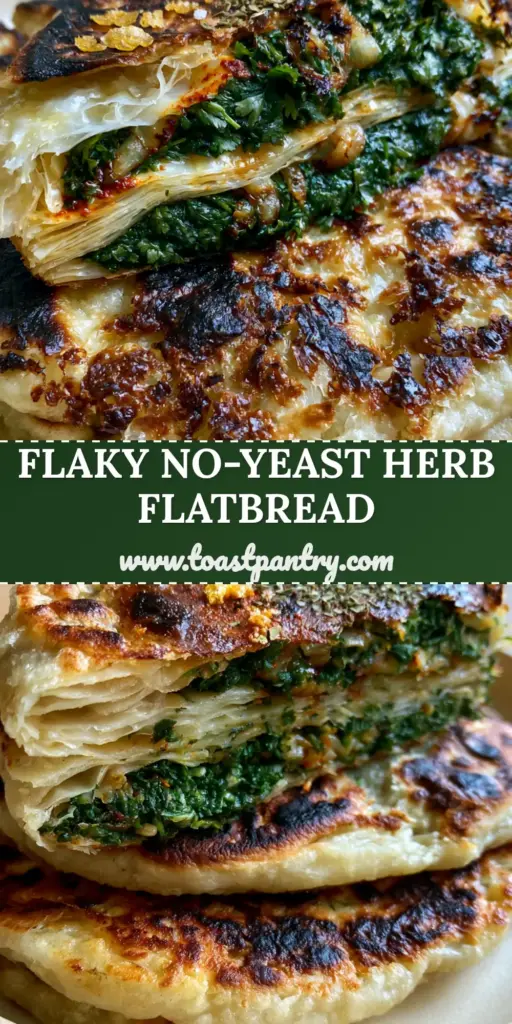
Creating the perfect Moroccan herb-stuffed flatbread is a rewarding journey into the heart of North African street food. The combination of translucent dough, emerald herbs, and that signature shattered crust makes every effort worthwhile.
We hope you feel inspired to get your hands floury and your kitchen smelling of toasted semolina and paprika oil. If you loved this recipe, please leave a comment below and let us know how your layers turned out!
Don’t forget to follow us on Pinterest for more culinary inspiration and share your photos with the community. Happy cooking!