This mango mousse cake is the ultimate celebration of tropical flavors, combining a buttery, crumbly base with a cloud-like mousse and a professional-grade reflective finish. If you have ever stared at a pastry shop window admiring those perfectly sharp, multi-layered slices, this guide is designed to bring that high-end patisserie experience into your own kitchen.
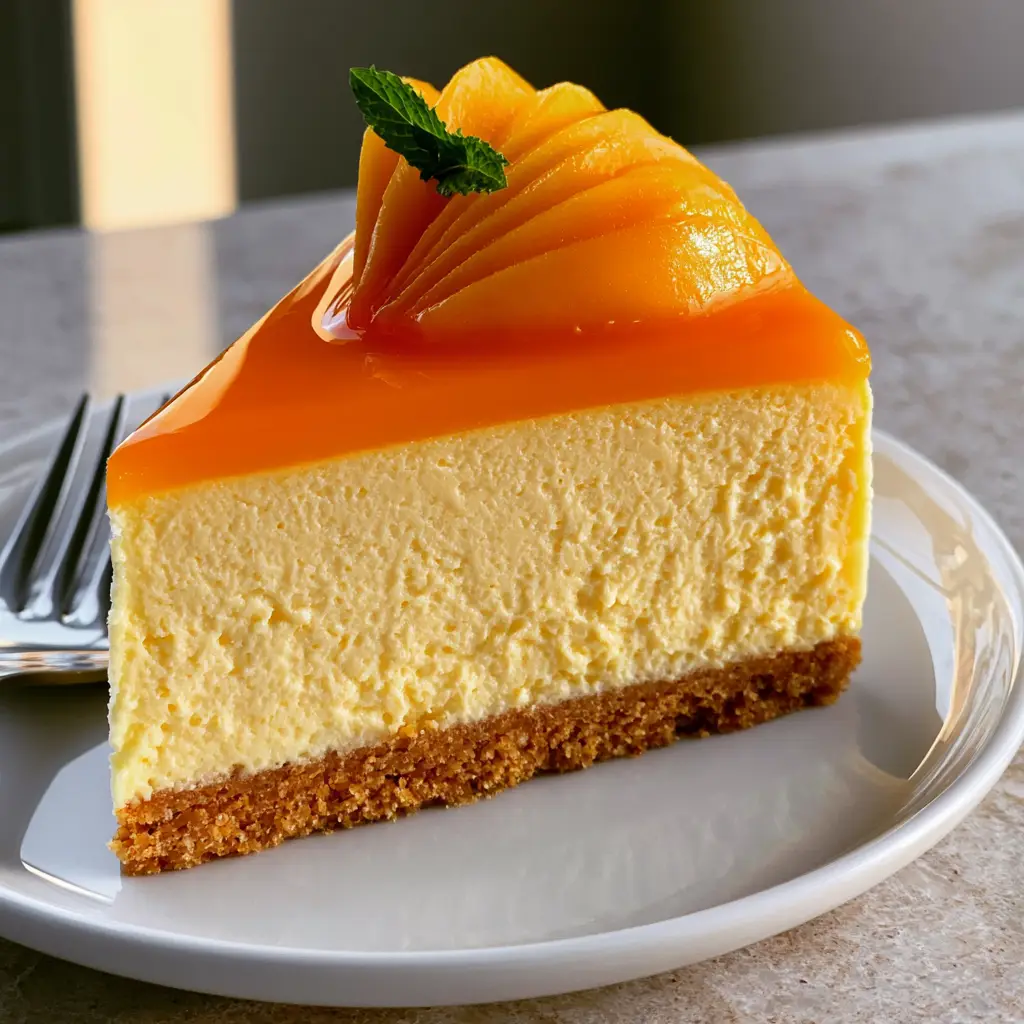
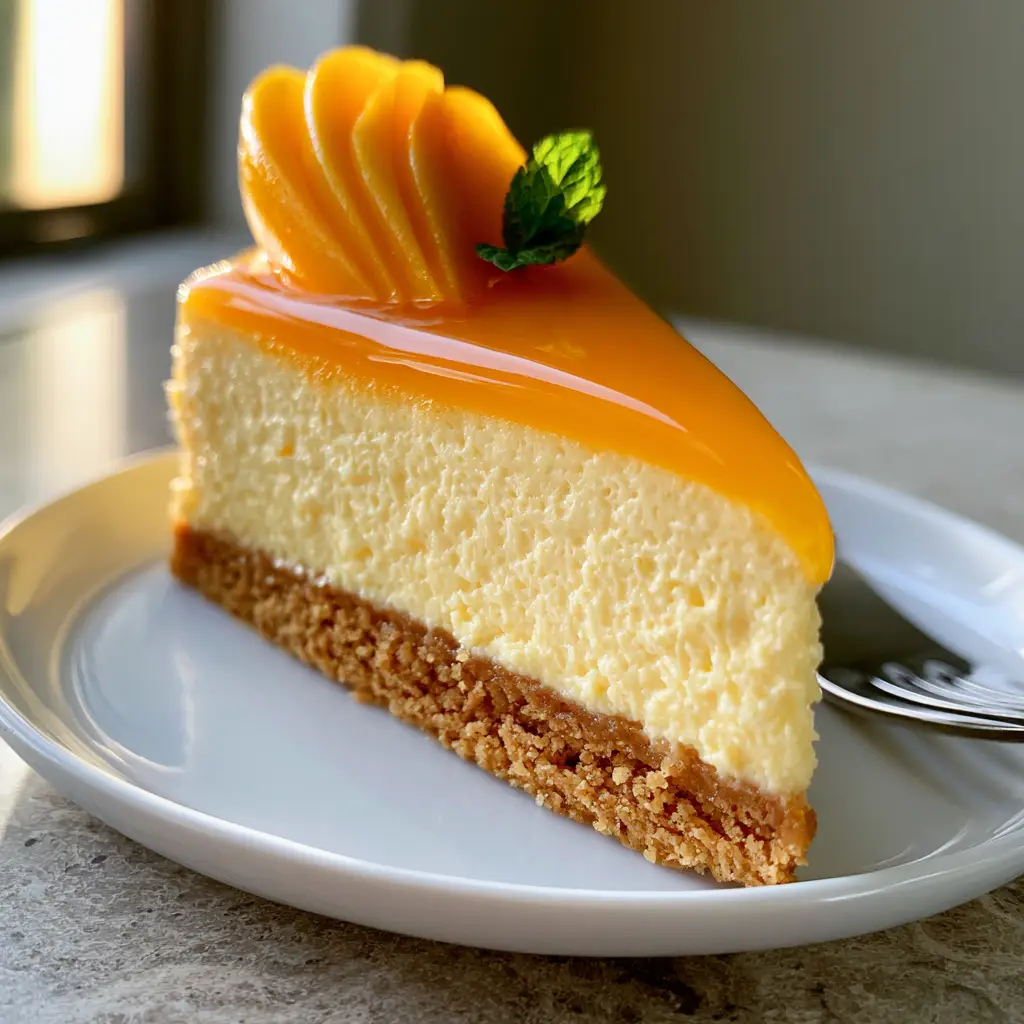
The beauty of a mango mousse cake lies in the contrast of textures—from the dense, golden-brown graham cracker crust to the airy, pale-yellow mousse that melts on the tongue. We finish the cake with a vibrant orange mirror glaze that is so glossy you can see your reflection in it, just like the stunning dessert pictured on our minimalist white ceramic plates.
Whether you are looking for a showstopper for a summer party or simply want to master the art of fruit-based entremets, this recipe delivers on every sensory promise. It is light, refreshing, and balances the natural sweetness of sun-ripened mangoes with a subtle citrus tang.
Why You Will Fall in Love With This Mango Mousse Cake
- Textural Harmony: Experience the satisfying crunch of a thick, buttery graham cracker crust paired with a velvety, aerated mousse.
- Visual Showstopper: The deep orange mirror glaze provides an exceptionally glossy and reflective top layer that rivals professional bakeries.
- Pure Fruit Flavor: By using high-quality mango puree, we achieve a vibrant, natural taste without the need for artificial flavorings.
- Professional Finish: We teach you the “fan” slicing technique for fresh mango to create that signature high-end garnish.
Premium Components for a Velvety Mango Mousse Cake
To achieve the sharp vertical layers seen in our visual blueprint, we must use specific foundational ingredients that provide structural integrity without sacrificing the “melt-in-your-mouth” quality.
Graham Cracker Crumbs: Use 1.5 cups (180g) of finely crushed crumbs. These provide the golden-brown, compacted base that supports the weight of the mousse layers above.
Unsalted Butter: You will need 1/2 cup (115g) of melted butter. This acts as the “glue” for your crust, ensuring it stays together when you cut those sharp, clean vertical slices.
Mango Puree: Use 2 cups (500ml) of smooth, sieved puree. For the most vibrant pale-yellow mousse and deep orange glaze, Alphonso or Kesar mangoes are the gold standard due to their lack of fibrous strands.
Heavy Whipping Cream: 2 cups (480ml) of chilled cream is essential. When whipped to soft peaks, it provides the “aerated” and “airy” texture described in our culinary blueprint.
Powdered Sugar: 3/4 cup (90g) offers sweetness that dissolves instantly. Unlike granulated sugar, it maintains the “velvety and dense” mouthfeel of the mousse.
Gelatin Powder: 4 tsp (14g) of unflavored gelatin is the “invisible” hero. It provides the structural set needed to keep the layers distinct and stable at room temperature.
Lemon Juice: 1 tbsp (15ml) of fresh juice brightens the fruit profile. It cuts through the richness of the cream and enhances the natural tropical notes of the mango.
Light Corn Syrup: 1/4 cup (60ml) is the secret to the mirror glaze. It creates that “glossy and reflective” finish by preventing the sugar from crystallizing.
The Essential Patisserie Tool Kit
Achieving a professional-grade mango mousse cake requires a few specific tools to ensure clean edges and a smooth finish. If you enjoy making intricate desserts, you might also want to try your hand at a layered mango crepe cake for a different textural experience.
- 9-inch Springform Pan: Essential for removing the cake without damaging the delicate mousse sides.
- Acetate Cake Collar: This is the secret to those “sharp vertical slices” and perfectly smooth edges.
- Offset Spatula: Used to level the mousse layer before the glaze is applied to ensure a flat, reflective surface.
- Fine Mesh Sieve: Crucial for straining your mango puree to remove any pulp or fibers for a “velvety” finish.
- Digital Kitchen Scale: For precision, especially when working with gelatin and fruit ratios.
Step-by-Step Construction of the Perfect Mango Slice
Preparing the Buttery Graham Cracker Foundation
In a medium bowl, combine 1.5 cups (180g) of graham cracker crumbs with 1/2 cup (115g) of melted butter and 2 tbsp (25g) of sugar. Stir until the mixture looks like wet sand and the buttery crumbs are evenly coated.
Press the mixture firmly into the bottom of a parchment-lined 9-inch springform pan. Use the bottom of a flat glass to compact it into a “thick, compacted golden-brown” layer, then chill in the freezer for 15 minutes to set the structure.
Crafting the Aerated Mango Mousse Layer
Bloom 3 tsp (10.5g) of gelatin in 3 tbsp (45ml) of cold water for 5 minutes. Gently heat the gelatin in the microwave for 15 seconds until liquid, then whisk it into 1.5 cups (375ml) of mango puree and 1 tbsp (15ml) of lemon juice.
In a separate chilled bowl, whip 2 cups (480ml) of heavy cream with 3/4 cup (90g) of powdered sugar until soft peaks form. Gently fold the mango mixture into the cream using a spatula until you achieve a uniform “pale-yellow” color with an “airy” texture.
Pour the mousse over the chilled crust. Use your offset spatula to smooth the top perfectly flat; this is vital for the mirror glaze to look “exceptionally glossy.” Chill for at least 4 hours, or until the mousse is firm to the touch.
Achieving the Reflective Mango Mirror Glaze
Bloom the remaining 1 tsp (3.5g) of gelatin in 1 tbsp (15ml) of water. In a small saucepan, combine 1/2 cup (125ml) of mango puree, 1/4 cup (60ml) of corn syrup, and 2 tbsp (30ml) of water over low heat until simmering.
Remove from heat, stir in the bloomed gelatin, and strain the mixture through a fine-mesh sieve to remove any air bubbles. Let the glaze cool to approximately 90°F (32°C)—it should feel slightly warm but not hot. Pour it carefully over the set mousse, tilting the pan to ensure an even, vibrant orange coating.
The Final Garnish and Presentation
To replicate the “single fan of thinly sliced fresh mango” seen in our professional photography, use a sharp paring knife to cut paper-thin slices of a firm mango. Arrange them in a delicate overlapping pattern on one side of the cake.
Place “one tiny bright green mint leaf” next to the mango fan for a pop of color contrast. For the cleanest slices, use a thin knife dipped in hot water and wiped dry between every single cut, ensuring those “sharp edges” remain pristine.
Expert Tips for a Flawless Mango Mousse Cake
- Sieve Everything: To get that “velvety, airy” mousse, always pass your mango puree through a fine-mesh sieve. Any pulp will ruin the smooth mouthfeel.
- Temperature Control: Never pour hot mirror glaze over the mousse. It will melt the cream and create a muddy, non-reflective mess. Aim for a “body temperature” feel.
- Acetate Secret: Line your springform pan with an acetate sheet. When you peel it off after the cake has set, the sides of your mango mousse cake will be glass-smooth.
- Avoid Over-Whipping: Stop whipping your cream at soft peaks. If you go to stiff peaks, the mousse will be grainy rather than “velvety and dense.”
Storage and Make-Ahead Instructions
This mango mousse cake is an excellent make-ahead dessert. You can prepare the crust and mousse layers up to 24 hours in advance. The mirror glaze is best applied at least 4 hours before serving to allow it to set into its “glossy” state.
Store leftovers in an airtight container in the refrigerator for up to 3 days. We do not recommend freezing the fully assembled cake with the mirror glaze, as the glaze can lose its “reflective” quality and become dull upon thawing. If you are looking for a simpler mango treat that stores well, consider a refreshing mango bingsu.
What to Serve with Mango Mousse Cake
This dessert is rich and creamy, so it pairs beautifully with light, acidic, or savory elements. If you are hosting a tropical-themed dinner, start with marinated steak kabobs or Thai ground pork skewers.
For a brunch setting, this cake serves as a stunning finale after a meal of protein-packed Greek yogurt waffles. If you want to lean further into the fruit theme, a strawberry shortcake smoothie provides a lovely berry contrast to the deep mango flavors.
Frequently Asked Questions
Gelatin is required for the structural ‘set’ seen in the blueprint. For a vegetarian alternative, you can use agar-agar, but the texture will be firmer and less creamy.
Dip a sharp, thin knife in hot water, wipe it completely dry, and make one clean downward stroke. Wipe the knife clean and repeat the process for every slice.
Alphonso or Kesar mangoes are best because they are non-fibrous, naturally sweet, and have a deep orange color that makes the mousse and glaze look vibrant.
This happens if the mousse hasn’t set long enough or if the glaze was poured while it was too hot. Ensure the mousse is firm and the glaze has cooled to about 90°F (32°C).
A lack of shine is usually caused by skipping the corn syrup or allowing the glaze to boil too long. Corn syrup is essential for that reflective, glossy finish.
The Ultimate Mango Mousse Cake Recipe
Mango Mousse Cake: A Tropical Masterpiece with a Glossy Mirror Glaze
Ingredients
Equipment
Method
- Combine graham cracker crumbs, melted butter, and sugar. Press firmly into a 9-inch springform pan to create a compacted golden-brown layer.
- Bloom gelatin in water, then melt and whisk into the mango puree and lemon juice.
- Whip heavy cream and powdered sugar to soft peaks. Gently fold in the mango mixture until pale-yellow and aerated.
- Prepare the mirror glaze by simmering mango puree and corn syrup, then adding gelatin. Pour over set mousse at 90°F (32°C) for a reflective finish.
Notes
Use an acetate collar for perfectly sharp, vertical edges when removing the springform pan.
Closing & Call to Action
Mastering the mango mousse cake is a journey into the world of professional pastry arts. With its vibrant orange glaze and buttery crust, it is a dessert that tastes just as incredible as it looks. If you enjoyed this recipe, please leave a comment below and tell us how your mirror glaze turned out!
For more tropical inspiration and step-by-step dessert tutorials, follow us on Pinterest and share your creations. Don’t forget to check out our other fruit-forward favorites like the mango tres leches cake for your next gathering!